Bule makes it possible to get in touch with the owner of a vehicle — quickly and securely — while car owners can be reached without sharing their personal information. The solution is a small physical device on the windshield combined with the Bule app, built on starti.app technology.
starti.app has a very personal approach to our collaboration. They are skilled and professional — there's no doubt about that — but at the same time, they manage to add an extra layer of personality to the service they provide. I really appreciate that.
Daniel Augustus
Founder of Bule

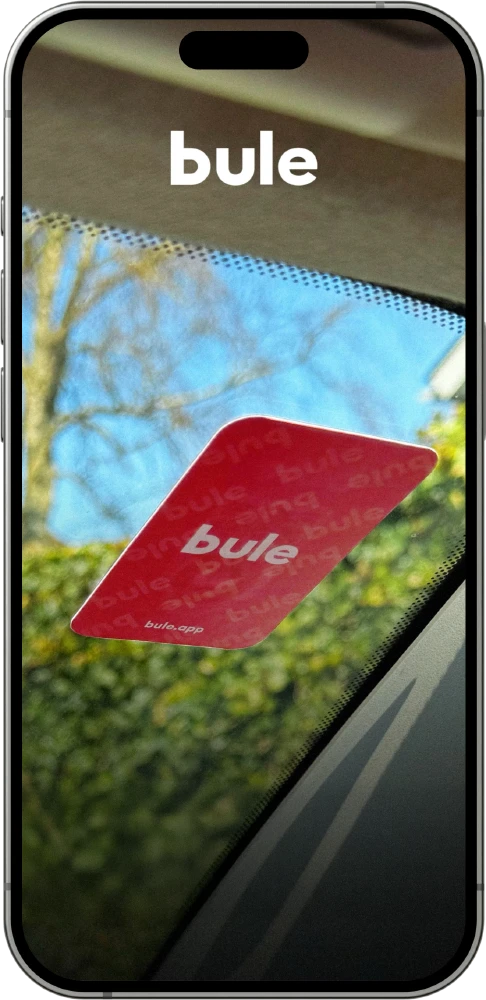
Bule's physical device — the card mounted on the car's windshield — is equipped with both a QR code and a built-in NFC chip, so it works in all lighting and weather conditions. If the QR code is difficult to scan (rain, darkness, dirt) the phone can simply be held close to the device to activate it via NFC.
What drives the entire experience is the intelligent, interconnected Bule network — a groundbreaking digital system that enables anonymous communication between sender and recipient, entirely without using personal data.
The network is not just a platform. It's a new way of thinking about physical-digital interaction in public spaces. The entire digital system is built with web technology, and Bule has used the starti.app technology to build an app on top of the web system.
There can be many situations where it is necessary to contact a car owner — or where you, as the car owner, need to be reachable. Perhaps your car is blocking the way, parked inconveniently or illegally. It could also be that the lights are on, a window is open, or there is an animal in the car on a hot day.
In other cases, you may need to inform the owner about damage — for example, if you have accidentally scratched a car or want to point out something important.
Whether you are the sender or the recipient of the message, it can often be difficult or even impossible to get in touch. And this is where Bule makes all the difference.
As the sender:
As the recipient (car owner):
As the sender:
As the recipient (car owner):
When someone scans the Bule device on the car, a link opens directly in their browser. From there, they can choose from a range of standard messages, such as:
The owner immediately receives a notification in the Bule app and can choose to respond or ignore the message if it isn't relevant.
At the same time, the car owner can also leave messages that are displayed when the device is scanned, for example:
If the sender wants to write a personal, customized message — e.g. "I accidentally scratched your car, please contact me at 50 20 70 90 so we can find a solution" — they need to use the Bule app, available in the App Store and Google Play.
Designed to be quick to install and simple to use — both for car owners and senders.
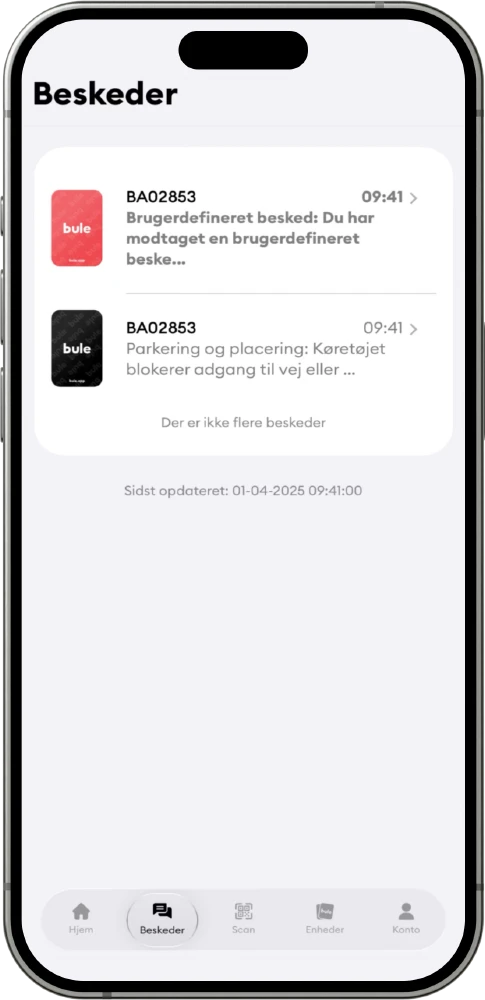
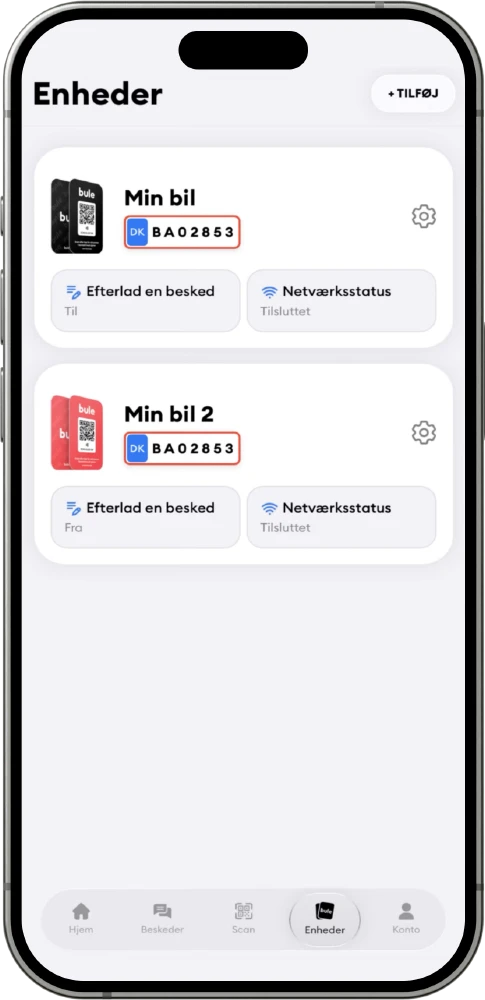
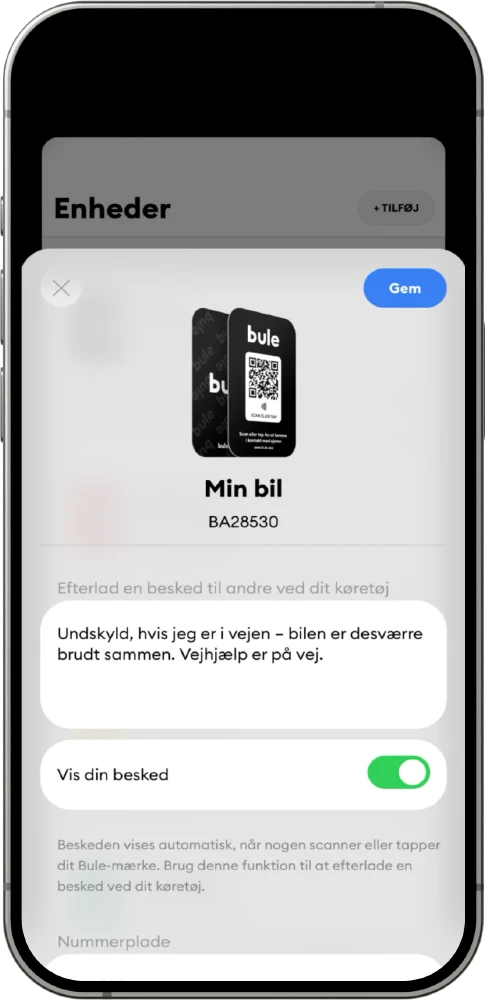
The Bule app can be used whether you own a car or simply want to be able to contact other car owners.
Receive your Bule device, register your vehicle in the app, mount the device on the windshield, and activate it by linking the activation code to your license plate. Everything happens quickly and securely in the app.
Install the Bule app to send a personal, customised message to a car owner. From there, you can easily compose and send messages — without ever sharing personal information.
"In the beginning, I thought a website and a PWA would be enough," says Daniel Augustus, the founder of Bule. A PWA (Progressive Web App) provided Daniel with many of the features he was looking for, and he could build it himself. But there were three major challenges he couldn't ignore:
When I found starti.app, I thought: That can't be right — it looks way too easy!
Daniel Augustus
Founder of Bule
"The closer we got to the release date, the more I felt that I wasn't satisfied with a PWA. It HAD to be a real app," says Daniel.
"I started exploring the market for app solutions and found several foreign services, but none of them felt right. When I found starti.app, I thought: This can't be real — it looks way too easy! I called immediately and got a fantastic introduction. After that, I didn't have a single doubt that starti.app was exactly the solution I needed."
The technical bit
The biggest similarity between a PWA (Progressive Web App) and starti.app is that they are both built from your existing website. The differences are a bit greater — with starti.app, you actually get a real app for both iPhone and Android, and that's a major upgrade from a PWA:
If you want to read more about the difference between a PWA and starti.app (and other alternatives), the IT consultancy firm Holion has written about it right here →
The Bule app is built on top of the website Daniel had already developed. This allowed him to have a real app for both iPhone and Android just a few weeks after getting started.
"starti.app is a brilliant way to create apps because you don't need to know Android or iOS programming — you just do what you're used to. I'm used to building web-based systems, so being able to continue with web and use starti.app's framework for the app part makes it super easy.
And starti.app has a very personal approach to collaboration. They are skilled and professional — there's no doubt about that — but at the same time, they manage to add an extra layer of personality to the service they provide. I really appreciate that," concludes Daniel.
Let's have a chat and find out.
